



Buyer’s Guide for Trash Receptacles
What’s Inside
- Your town’s first impression
- Stopping the problem before it starts: prevent littering
- Commercial trash receptacle placement
- Types of trash receptacles (outdoor, indoor, recycling, cigarette, transportable, dog waste, animal-proof)
- Choosing your material
- Capacity guide
- Lids & openings
- Emptying options
- Unique designs
- Summary
- Resources
- About the Park and Facilities Catalog
Outdoor Trash Cans & First Impressions
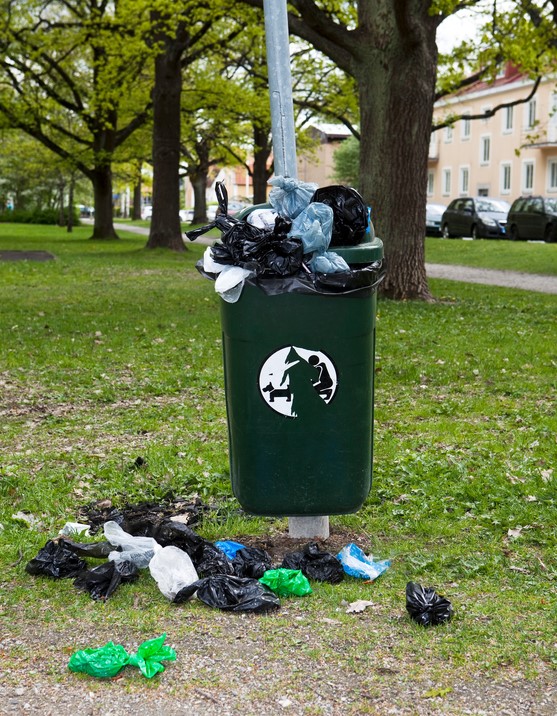
People judge a community by its appearance. There’s a big difference between a street lined with flowers and one strewn with debris. A simple strategy—installing enough commercial trash cans—is critical.
Which area feels more inviting? The small, overflowing can, or a larger unit with an outdoor ashtray that reduces cigarette litter? Trash generation has increased with plastics and disposables, while many still don’t recycle (Virginia Tech).
Keep America Beautiful tracks community cleanliness and guides local programs. The City of Los Angeles added thousands of receptacles, launched Adopt-A-Basket, and increased cleaning to reduce litter.
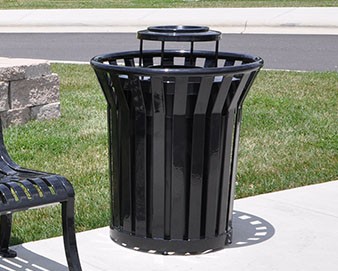
Whether you manage a city, park, business, or campus, it’s essential to keep the environment pristine. Studies show litter lowers property values and harms public health. The existence of litter itself encourages more litter—so step one is providing enough, easy-to-find, high-quality receptacles.
Stopping the Problem Before It Starts: Prevent Littering
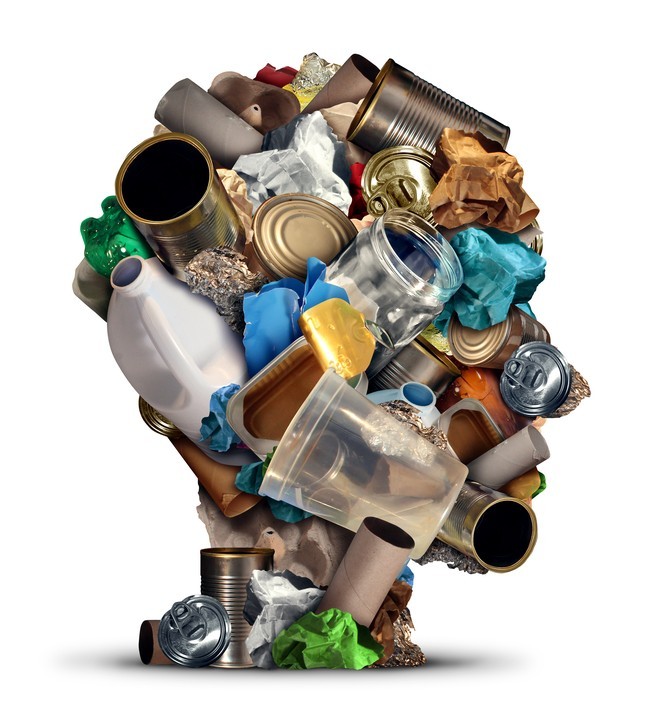
Pop quiz: Motorists aren’t the only source. Common sources include household trash handling, commercial dumpsters, loading docks, construction sites, uncovered truck loads, and pedestrians.
Individuals

- Carry litter bags; pick up stray trash.
- Join cleanups; report hot spots.
- Keep lids on home cans; tie bags closed.
- Use portable ashtrays; clean up pet waste.
- Maintain/landscape shared areas to discourage litter.
Facility Managers

- Install and spread out easy-to-use cans; add ash trays at entrances.
- Stage extra cans for events; empty frequently.
- Cover dumpsters; ensure staff access.
- Educate, promote recycling, and run anti-litter programs.
Commercial Trash Receptacle Placement
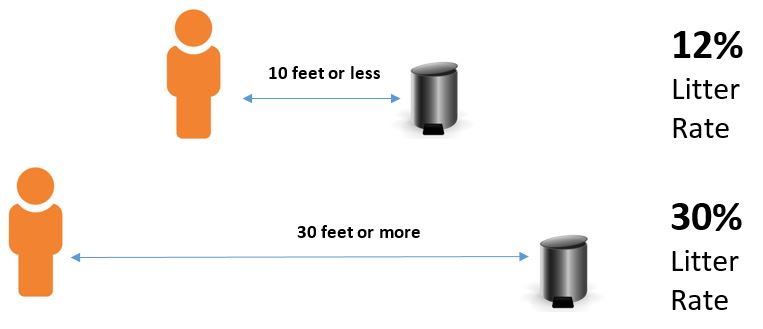
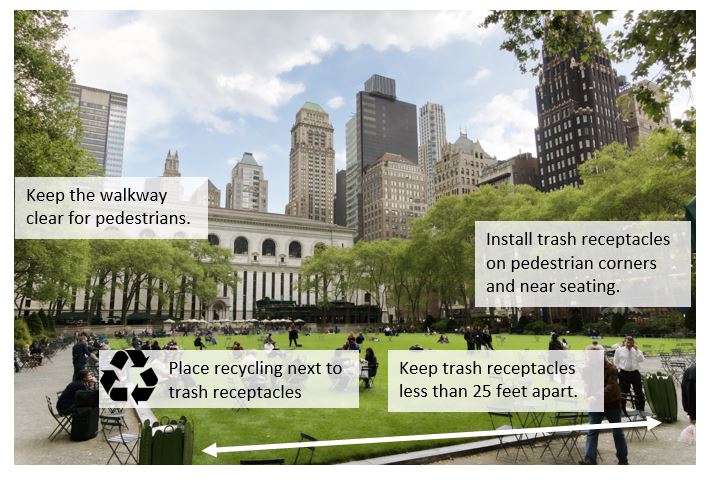
Plan before installing. On a site map, mark high-traffic nodes (sidewalk intersections, food areas, entrances). Cans must be obvious to first-time visitors—if they have to hunt, they won’t use them.
Then observe on site: what are guests carrying (food, coffee, dog waste, cigarettes)? Where does litter accumulate? Talk to custodial staff.
Place cans based on user behavior, not just servicing convenience:
- Transition points: transit stops, vendors, entrances.
- Intersections: aim for 2–4 per downtown block; one near each crosswalk and one mid-block near seating.
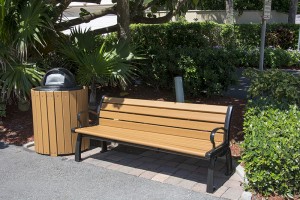
- Near seating: benches, picnic tables, smoking areas.
Types of Trash Receptacles
Outdoor Trash Cans
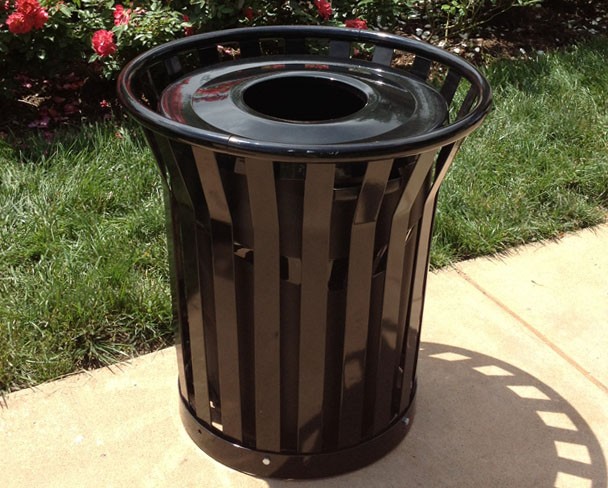
Higher-capacity and built to withstand weather, animals, and heavy use. Consider lids/ash trays to deter scavengers. Mount to ground for stability and theft deterrence. Choose materials suited to outdoor conditions (see “Choosing your material”).
Indoor Trash Cans
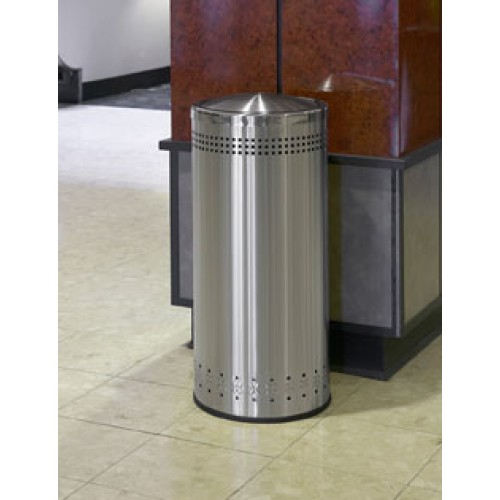
Lower capacity and purpose-specific. Restroom cans are often stainless with open or pedal lids to reduce bacteria; office cans range from under-desk to common-area sizes.
Recycling Receptacles
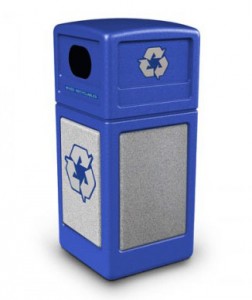
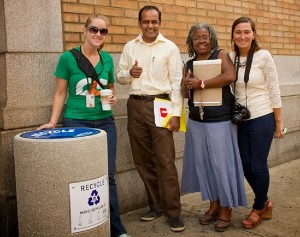
Clearly branded with recycling symbols; may mirror city standards or be multi-stream (cans, glass, paper). Smaller openings reduce contamination. Installing them can support LEED credits.
Cigarette Receptacles
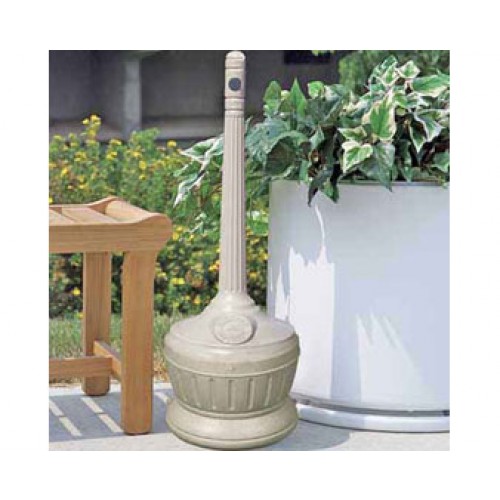
From sand urns to combo ash/trash units and freestanding stations. Place visibly near entrances (respect local setback rules). High-volume areas need more frequent emptying.
Transportable Receptacles
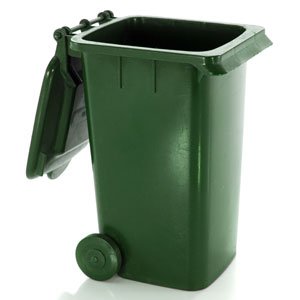
Essential for festivals and peak events when trash spikes—especially around food. Choose wheeled carts or use dollies to deploy and retrieve quickly.
Dog Waste Receptacles
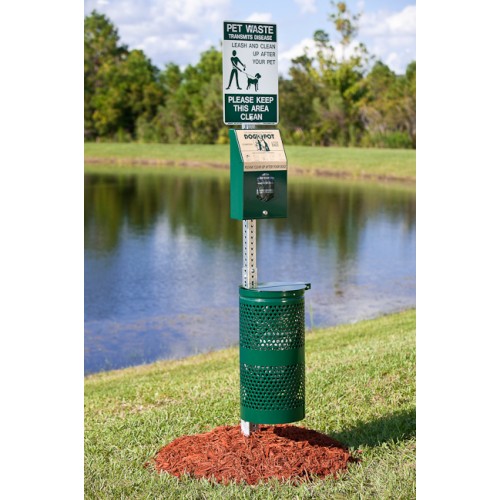
Pet waste accumulates fast and pollutes waterways. Provide stations with bags and signage along paths and at entries. ~40% of owners don’t pick up without prompts and infrastructure.
Animal-Proof Receptacles
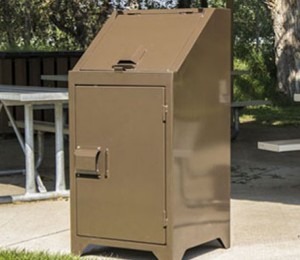
In wildlife areas, use tested bear-/animal-resistant models with deterrent latches. Bears can smell food from great distances—secure cans prevent dangerous habituation and scattered trash.
Choosing Your Trash Receptacle
Match material to conditions and aesthetics:
- Anti-vandalism: steel with durable thermoplastic to deter/remove graffiti.
- Moist areas: recycled plastic, galvanized steel, or stone aggregate.
- Outdoor durability: fiberglass, plastic, aluminum, steel, or concrete (look for warranties).
- Near grills: avoid solvent-sensitive plastics (lighter fluid heat/chemicals).
- Immovable: concrete (often no mounting needed).
- Fire-resistant/industrial: galvanized steel.
- Decorative match: mesh/painted steel, fiberglass, or plastic to coordinate with site furnishings.
Keep branding cohesive—match benches, tables, and signage finishes/colors.
Capacity Guide
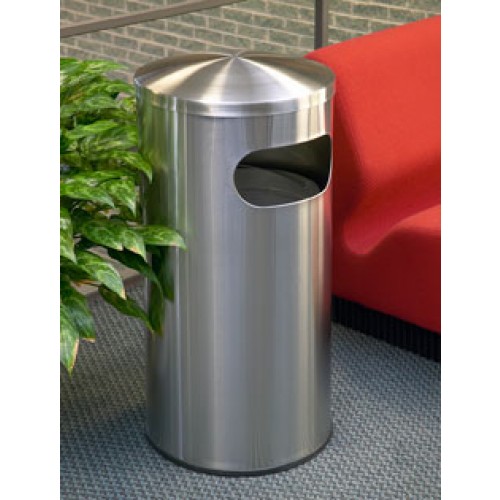
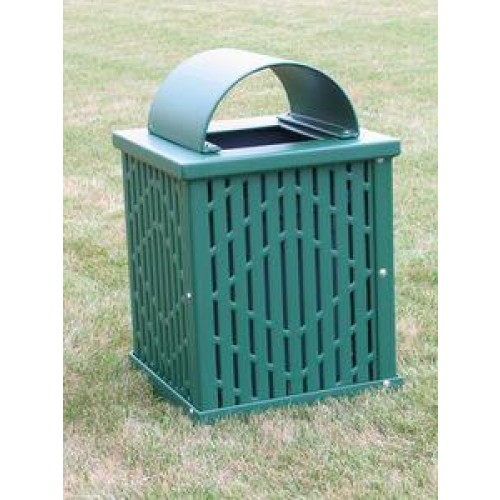
| Small Capacity — Indoor | Large Capacity — Outdoor |
|---|---|
|
|
| 10–20 gallons | 30–60+ gallons |
| Control odors in enclosed spaces; lids help in restrooms. Choose plastic/metal that block smells. | Durability is crucial; heavy units may need mounting to resist tipping/weather. |
| Great for lobbies, restrooms, offices, hallways; low-traffic areas. | Best for outdoor events, busy parks, fairs; younger crowds generate more waste. |
Lids & Openings
Windy days and awkward openings create litter. Keep openings accessible (generally <36" high). Avoid doors that require touching where possible.
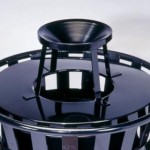
Ashtray top: Cigarette butts are the most common litter. Ash/trash combos or standalone urns reduce butt litter (some use refillable sand).
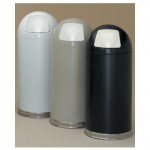
Bullet top: Open or push-door designs; sleek shape funnels items for easy deposit.
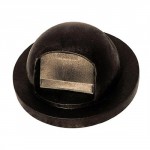
Dome top: Resists rain, snow, and wind; good where cans aren’t under cover.
Flat top / Pitch-in: Touch-free; quick and convenient; fewer moving parts to maintain.
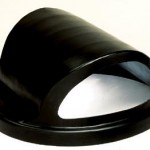
Hooded top: Rain protection similar to dome without a push door.
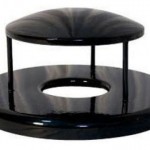
Rain bonnet: Keeps contents dry while offering nearly 360° access.
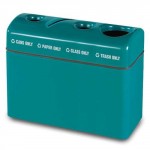
Recycler top: Multi-aperture lids for cans, paper, bottles, and general waste to reduce contamination.
Emptying Options
Side access door: Door slides/pulls/opens for fast servicing; easier for staff but more moving parts to maintain.
Top empty: Traditional lift-out servicing; keep style consistent across your site for efficiency.
Unique Designs
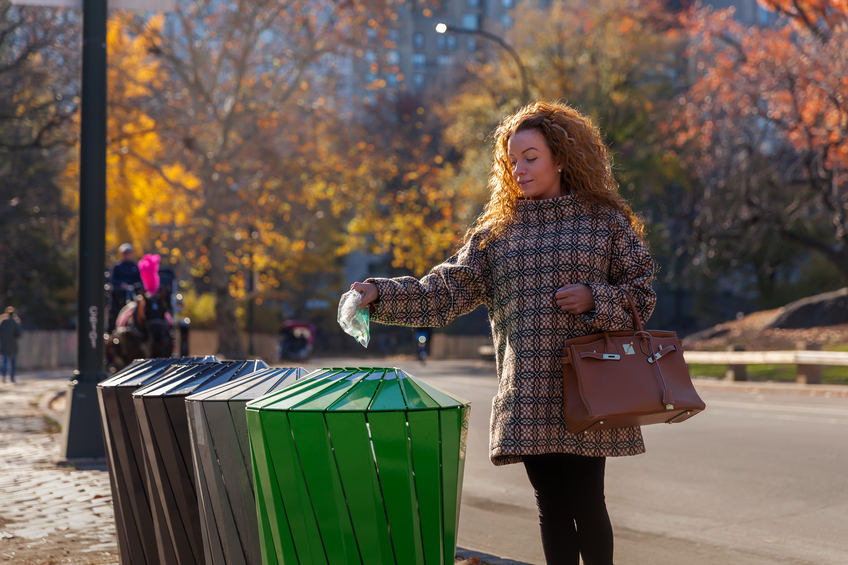
Colorful, branded, or message-bearing cans attract attention and reduce litter—so long as they are still unmistakably trash receptacles. Add logos or anti-litter messages to reinforce your program.
Summary
- Place the right number of cans where people actually need them (transitions, intersections, seating).
- Use eye-catching, clearly labeled units; pair trash + recycling + ash where smoking occurs.
- Select materials and lids to match environment, weather, and vandalism risks.
- Right-size capacity; mount larger outdoor cans; maintain a consistent emptying method.
- Support with education, signage, and periodic audits of litter hot spots.
Choose great liners: Heavy-duty, leak-resistant bags; metal or plastic liners based on solvents/heat exposure. Secure liners at the rim.
Installation: Surface-mount to concrete for stability and theft prevention; in-ground options for softer surfaces; some units use weighted bases.
Resources
About the Park and Facilities Catalog
The Park and Facilities Catalog is headquartered in Boca Raton, Fla. The company is a national manufacturer and provider of commercial trash receptacles—steel, recycled plastic, concrete, aluminum, wood, and fiberglass—engineered for durability and UV resistance. We also supply pet waste stations, animal-proof cans, food-court and restroom receptacles, step-on cans, custom-logo outdoor cans, ashtrays, and accessories. Since 2001 we’ve served parks, schools, universities, restaurants, retail centers, multi-family communities, and more across the U.S., plus benches, picnic tables, bleachers and hundreds of other site furnishings.
CALL US TODAY: 1-800-695-3503 or visit The Park and Facilities.