


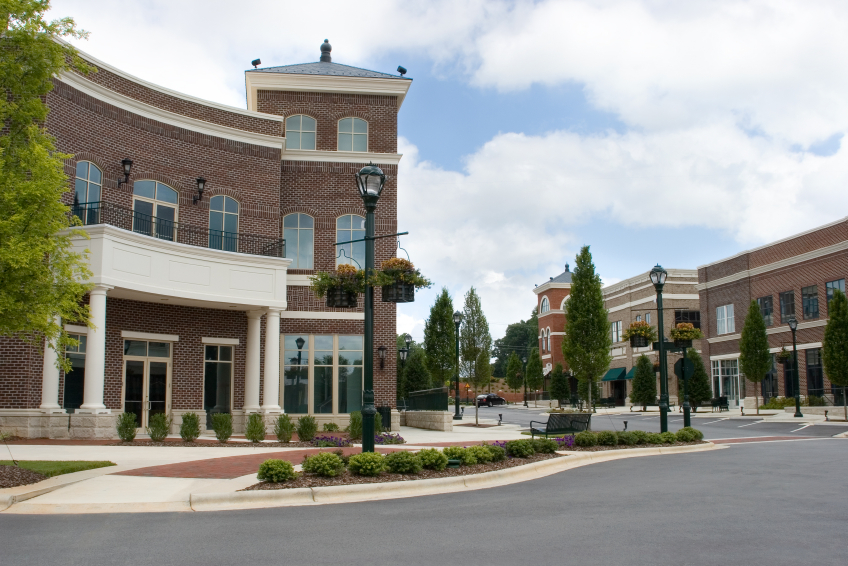
 Lifestyle center with outdoor site furnishing
There's a new trend taking place in shopping center design which focuses on "lifestyle centers" - a mix of specialty stores, outdoor site furnishings and other uses. Ironically, all the items you find in a traditional small town.
That's the concept. Giant malls are designed to create a place of community, especially in suburbs, where all the streets look the same and there is no small town to visit.
And malls serve their purpose. You can find nearly anything you need in a mall, you don't have to worry whether it's snowing outside or 100 degrees and many create an exciting "wow" big space feel. A feeling you don't get, by the way, shopping from your computer.
But lifestyle centers take a different approach. Because in many suburbs people are also unable to experience that small town feel. A lifestyle center looks to recreate a "Main Street America" atmosphere with brownstone type facades and plenty of outdoor site furnishings such as benches or planters. And it works.
This is a great niche for any community because the lifestyle centers don't require a large amount of space, like a larger, regional mall. And they bring shopping closer to the consumer (great when you need to pick up something quickly, because certainly the large selection is not there as it is in a mall).
Here are some of the major differences between a mall and lifestyle center:
- Stores - malls generally have the mega-anchor tenants, eg Macy's, Nordstroms, J.C. Penneys, Sears and others. Lifestyle centers generally have small boutique tenants: Pottery Barn, Gap, Banana Republic, Crate & Barrel, etc.
- Size - a regional mall can easily cover 2 million square feet while you will find lifestyle centers averaging around 300,000 square feet in size. This enables them to be easily inserted into a suburban setting. In fact, the lifestyle centers might be a good remedy for a failing strip mall and certainly add more excitement than many outdated shopping centers.
- Mixed-Use - malls are basically retail destinations with a food court. Lifestyle centers are meant to be more of a mix - retail, residential, offices, restaurants, gyms, coffee shops, etc. (Just like you would find in a small town).
The International Council of Shopping Centers says there are only about 400 lifestyle centers in the US and describes them as a "multi-purpose leisure-time destination, including restaurants, entertainment, and design ambiance and amenities such as fountains and street furniture that are conducive to casual browsing."
Money for roof and climate control goes into outdoor site furnishings
Think about this. Because there is no roof, there is a tremendous savings in construction. Same with utilities. You don't have to heat or cool a gigantic building.
Therefore builders are able to put more emphasis on outdoor site furnishings. Add cobblestone streets, like a quaint English village. Include old-fashioned lighting fixtures. Install a few fountains, reminiscent of a town square in Italy. Sprinkle the area with outdoor commercial planters, similar to a French village.
That's a great point. Because the way a lifestyle center is designed, with its metal outdoor benches, caféseating and more, the appealing feature is not only the casual browsing, but also the opportunity for casual interacting with others in the community. Since it is located so close, you are likely to meet or see one of your neighbors in a lifestyle center.
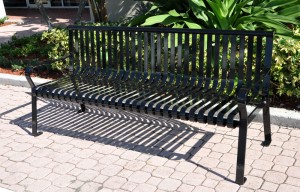 Metal outdoor benche
That might lead to a casual conversation over coffee or a light lunch. Maybe there's a hobby store in the center where people can meet at night to learn how to paint watercolors. Or perhaps a coffee shop will feature a musician playing a few tunes to a nighttime crowd.
Because of its proximity to residences, people are more likely to get out of the house and head to the lifestyle center. That makes the cash registers ring.
Ironically, while experts talk about this "hot, new trend" in retail development, again, it's mostly the recreation of small town America with its brick buildings, sidewalks and outdoor site furnishings. But hey, small towns were the heart and soul of American communities for centuries for a reason. Malls might have reinvented the retailing wheel, but there is certainly a place for a nostalgic return to our roots as well.
To see a good example of one lifestyle center in Arlington, VA, visit Market Common.
For a huge selection of commercial-grade outdoor site furnishings, see The Park Catalog.