


 Doctors beginning to write prescriptions for their patients to spend more time in parks
Parks and doctors are starting a movement to get us to think differently about visiting a park where people usually relax on a park bench or enjoy a cookout at a picnic table.
These different groups want to persuade their patients that going to a park can be more like taking medicine.
Specifically, physicians are urging their patients to visit a park as a way to get moving. Exercise. Get more exposure to fresh air and sunshine. That's the remedy many doctors are now recommending for their patients.
Their prescriptions include a list of parks near their home, specific activities they can do, duration of those activities and how often they should do it.
The program is also partnered with the National Park Service and their Healthy Parks Healthy People US program.
Take the example of one doctor, Dr. Robert Zarr who founded Park Rx America. As a pediatrician at Unity Health Care in Washington, DC, he began to notice that many of the ailments his patients were experiencing were partially due to weight issues. He also noticed 25% of their children have the same issues.
So, he started writing actual prescriptions urging his patients to visit their local park and get in some walking, jogging or other health-enhancing activity.
He talked to other doctors and they liked the idea. So they started prescribing park visits for their patients as well.
Now, the program is to the point where the physicians have written more than 500 prescriptions for park visits.
The medicinal benefits of spending time in a park
What a great concept! Here's why.
- The Price of Admission = Zero: Sure. Many people would like to join a gym, but the cost could be prohibitive for them. When it comes to parks, there is no cost of admission or membership fees. A person could jog or walk the trails and still get a workout like they would get on a treadmill in a gym. In addition, many parks now offer outdoor fitness equipment where people can work their abs and biceps.
There are outdoor exercise machines such as chest presses, leg extensions, cardio walkers, ellipticals, leg presses and upright bicycles where a person can essentially get the same workout they would get at an expensive gym. But while an individual is burning calories, they are not burning cash in their pockets.
- Family Participation: another great benefit is that at a park, the entire family can participate. Imagine paying a gym membership for all family members. Plus, you don't see many kids in gyms. But do you do see children scrambling up ladders, running around playgrounds, and burning up calories. Mom, dad and the kids all get a workout, doing the activities they like to do.
- Fresh Air: there's the inside of a gym and then there is the great outdoors. You cannot beat Mother Nature for supplying some of the best medicines out there. Let's start with fresh air - all those trees, plants and grass are going to supply a nice blast of oxygen for patients. Studies show a brain needs 20% of the oxygen in your body. An increased amount of oxygen will improve concentration, increase energy, bring clarity and has a positive effect on your mood levels.
Oxygen has been shown to increase levels of the feel-good serotonin chemicals in your brain. Fresh air also cleans your lungs, releasing airborne toxins. Oxygen is a valuable asset for your immune system - if helps white blood cells fight bacteria and germs. Research shows clean air also does wonders for your blood pressure, heart and digestive system. What type of pill on the market can do all of those things?
- Sunshine: Talk about a wonder drug. The sun's rays have tremendous benefits. Remember, mankind used to spend most of their time outdoors. Not so much in modern times. That's why it's smart to get outside in a park during the day. Let's start with that weight loss program. One study found that the higher your levels of Vitamin D, the more likely you will succeed on a diet. Vitamin D from the sun is also known to increase bone strength and reduce some types of cancer.
Like fresh air, sunshine helps to release serotonin and endorphins that make people feel better and happier. More serotonin reduces stress and also helps you sleep better. To reduce blood pressure and risks of heart attack or stroke, there is a process that when sunlight hits the skin, it releases nitric oxide into the bloodstream which can lower blood pressure. The cost of this prescription? Nothing. Where do you go to get it? Step outside.
- Socializing: Another benefit of a prescription that sends you to a park is the opportunity to mingle with fellow citizens. Friendships and socializing are always good for mental health. And, its great for kids.
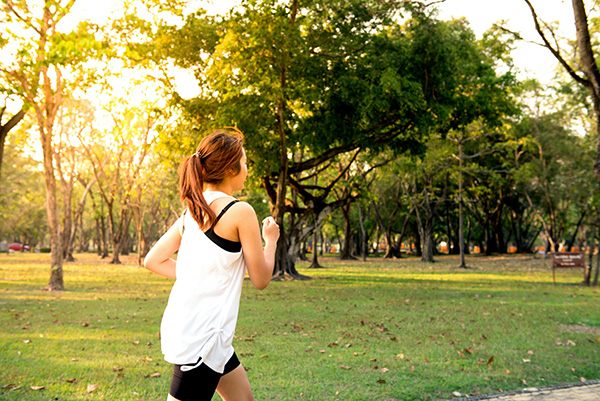 Park Rx encourages its patients to spend more time in local parks doing specific activities to benefit their well-being
Research continually proves the benefits of green spaces
According to a Park Rx handout, nature improves blood glucose levels in diabetics and activity helps with obesity. Spending time outdoors lower cortisol levels and blood pressure
There's plenty of research that backs up the notion that participating in greens spaces increases longevity.
In a study of 2,200 older adults in Tokyo over a 5-year period, areas with the highest percentage of forest coverage had lower rates of lung, breast and colon cancers. (Incidentally, people in Japan have a special term for immersing themselves in a park and enjoying the benefits of fresh air, greenery and sunshine - they call it "forest bathing.")
In Canada, a 10-year study involving 575,000 urban-dwelling adults, found that urban green space was associated with overall lower mortality rates, with respiratory mortality showing the best results. Another similar study in northwest Florida found in a five-year study that green spaces were associated with a lower risk of death by stroke.
It goes on and on. There's no disputing it. Green spaces are good for your health.
One of the great aspects of Park Rx is that it persuades people to think differently about parks. Many people, including parents, might think of a park as a place to sit on a park bench and watch their kids play or people in general. Instead of sitting on that bench or picnic table, these prescriptions encourage individuals to get up and be one of those walkers, hikers, joggers or bicycle riders.
This program has a long way to go. For example, physicians who participate are thinking about how they can confirm that their patients are taking the medication - meaning, actually visiting a park as prescribed. Also, how often they visit the park and what activities they do while there. (Sit on a park bench look at your iPhone. Nope. Doesn't count.)
Partnering with local parks, corporations, insurance companies
They are considering perhaps finding a way to get parks and recreation officials involved in the program as well to help monitor patients.
However, with medical patients, you also have HIPPA (Health Insurance Portability and Accountability Act) and other privacy concerns.
The program will obviously progress and continue to be refined.
The NPS wants to spread the idea by partnering with health care providers, corporations, insurers, local parks, civic organizations and other groups.
The timing couldn't be better. All forecasts point to more and more people moving into urban areas. It is estimated that 86% of the population of developed nations will soon be living in cities. Parks will be even more important in the future.
One big accomplishment of the program is the raising of awareness about how parks can be beneficial to one's physical health. How a park can truly be considered as a treatment for illnesses.
This time, recommended not only by your parks department, but a family doctor as well.
You can't get a better prescription than that.
"Our national parks have always been loved for their symbolism and scenery, but we aim to increase the awareness and recognition of their efficacy for disease prevention, medicine and therapy." - NPS Director Jon Jarvis
Note: The Park and Facilities Catalog is a strong advocate for parks and has supplied national, state and local parks since 2001 with a variety of park furnishings such as park benches, picnic tables, permanent grills, drinking fountains and hundreds of other products.