


 Study ranks cities according to entertainment, recreational and park facilitie
Remembers the software game Sim City where your score as a mayor was determined by improvements you made to a town, including the number of parks?
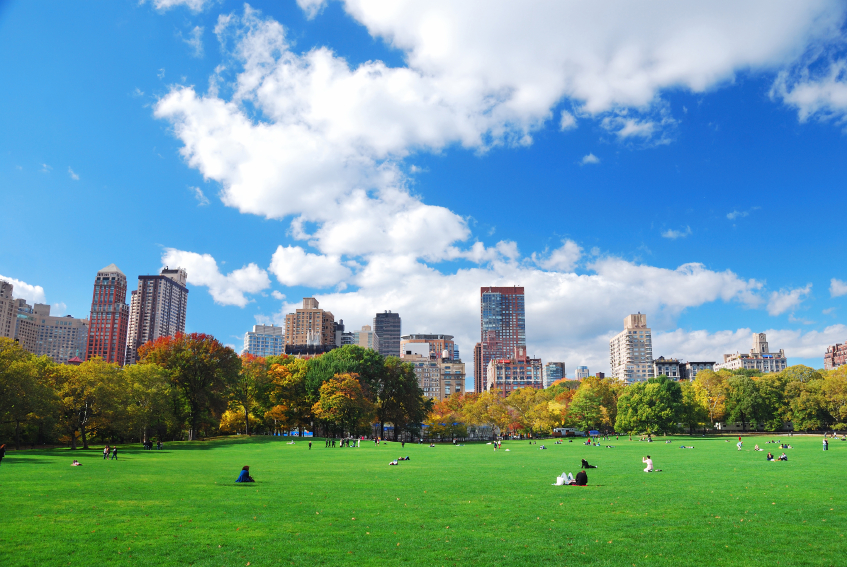
Parks are an important benefit in the minds of citizens. They pay a ton of taxes. Those taxes go for routine expenditures such as roads, manhole covers and sewer drains which to be frank, are not very exciting. But those taxes also go for parks, which on the other side of the spectrum, are very desirable and a place of refuge for urban dwellers.
So sure, city officials are judged by their parks. Are the parks well maintained? Do they have an adequate number of outdoor site furnishings such as benches, picnic tables, water fountains and restrooms? Are those recreation areas clean, with plenty of empty park trash cans scattered in key locations throughout the area?
A company called WalletHub attempted to create a way to rank cities in terms of entertainment, recreational facilities and parks. It's not an easy undertaking. That's especially true if you must conduct your research from a cubicle since it is not practical or easy to actually walk in each and every park in the top 100 cities. You can tell they put quite a bit of admirable effort into their study.
The group took a noble stab at the idea and came up with a list they think gives the public some idea on where their city stands.
For parks, they created a simple methodology called "Quality of Parks" and rated the cities on percentage of the population with walkable park areas, park playgrounds, park acreage per 100,000 residents, percent of designed park areas, percent of the parkland as part of the city's overall area and the presence on TripAdvisors' "Top 25 Parks" list (this last criterion was only given half the weight in the calculations).
For entertainment and recreational facilities, they calculated the number of the following attributes per 100,000 residents: music venues, coffee shops, public beaches, tennis courts, public golf courses, public swimming pools, baseball diamonds, basketball hoops, bike rental facilities, food festivals and sports fans. All of those were weighed equally except for beaches, which was cut in half.
The researchers gave double weight to the total number of attractions.
In their overall calculations they also used costs or expenditures and climate. For costs they looked at factors such as fitness club fees, movie costs, bowling costs, grooming costs, price per beer or glass of wine, average food prices and prevalence of affordable 4.5 star restaurants.
Obviously, there are plenty of holes in this study if you want to pick it apart. The obvious one is climate. You can't really blame a city if it has chilly or wet weather. People still live there for a reason. They still find ways to have plenty of fun in a park, even if it means cross-country skiing across a snowy park tundra (that's actually a lot of fun).
Then you have the issue of beaches. Even half weight is way too much. Not every major city is going to have beaches and if they do have them, they might be tiny and not much fun. Certainly not like South Beach in Miami. Probably should scratch that criterion.
Same goes for swimming pools. If the average temperature in town is 50 degrees, A) you are not going to have many swimming pools B) they probably won't be that great or that big. Pull the plug on that factor as well.
What about coffee and tea shops? Meh. That seems sort of subjective when it comes to recreation. One could argue they should have microbreweries as a grade as well.
Then there is that whole cost issue. Yes, certain cities are going to be costly. But that shouldn't be held against them regarding quality of parks and recreation.
The factors WalletHub used in regard to the number of attributes per 100,000 residents seems solid. Also, the percentages of parkland versus city land. That also seems like a quality benchmark, as are many others.
List of Top Cities for Parks and Recreation plus Entertainment
We sympathize with WalletHub. You gotta start somewhere. So here are their top 10 cities overall for Entertainment and Recreational Facilities (see map below for all cities):
- Cincinnati, Ohio
- Omaha, Nebraska
- Scottsdale, Arizona
- Tampa, Florida
- Boise, Idaho
- Orlando, Florida
- Minneapolis, Minnesota
- Louis, Missouri
- Reno, Nevada
- Denver, Colorado.
Here are the lowest cities on the list:
- Fresno, California
- Anaheim, California
- Garland, Texas
- Fremont, California
- North, Las Vegas
- Chula Vista, California
- Hialeah, Florida
- Laredo, Texas
- Irving, Texas
- Newark, New Jersey
- Jersey City, New Jersey
Since we love parks, we were curious to see who they ranked just on their "Quality of Parks" criteria. Here are their choices:
- Omaha, Nebraska
- Minneapolis, Minnesota
- Cincinnati, Ohio
- Madison, Wisconsin
- Chesapeake, Virginia
- Virginia Beach, Virginia
- Boston, Massachusetts (actually tied for sixth)
- Albuquerque, New Mexico
- Seattle, Washington
- Irvine, California
Here are the cities that ranked at the bottom of their "Quality of Parks" list:
- Riverside, California
- Mesa, Arizona
- Laredo, Texas
- Newark, New Jersey
- Fresno, California
- Anaheim, California
- Las Vegas, Nevada
- Hialeah, Florida
- North Las Vegas, Nevada
- Birmingham, Alabama
- Gilbert, Arizona
There are a few positive developments that can come out of rankings like this. For one, if your city ranks near the top, that's encouraging to the people who run the town. Shows they are doing a great job.
Conversely, if a city ranks near the bottom, then it's time to step up to the plate (and maybe add more baseball diamonds to your parks. Or maybe add more park land so you can add more baseball diamonds…and volleyball courts…and basketball courts.)
Sure, municipal budgets are tight. Park budgets are always tight. There are solutions. For one, "friends of the park" organizations can help focus on improving parks.
Then there are also corporate sponsors.
Many parts of a park can be sponsored by everyone from large national companies to individual taxpayers. Those donors can provide everything from bandstands to memorial park benches, park trash cans and other park amenities.
Parks are critical to the spirit of a town, its health, its mental well-being. WalletHub recognized this. Even the Sim City software game recognized this.
Parks and recreation officials have a tough time getting the funding they need. Sure, we need to get rid of potholes. But hopefully, research like this will show many city officials where a major part of their focus should be directed.
To see the entire list prepared by WalletHub go here.
Find out where your city ranks below.