


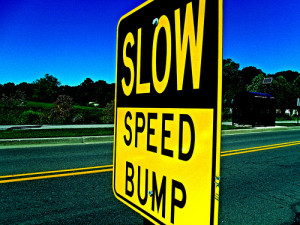
 Let's talk about speed bump safety for a minute here.
Those parabolic, circular shapes, gently curving upward are there to give people an idea to slow it down…these are speed bumps and humps, and these two words typically get used interchangeably in the traffic safety world. Speed bumps have a more abrupt design and usually stop vehicles completely, where traditionally what we see are speed bumps made of pavement or asphalt which can deteriorate and weather down quickly over time. You will typically see speed bumps and humps in parking lots and residential areas, where speeds should be between 5-10mph, for the safety of pedestrians, cyclists and other drivers that depend on the preventative measures that are supplemented by traffic safety in neighborhoods and commercial lots.
While there are numerous amounts of traffic calming and speed deterrent devices to add to your roads and parking lots, each type is dependent on the area and speeds you are trying to adjust your clientele and patrons to. The most important thing to do is make sure it is inviting enough that the bumps and humps do not cause any vehicle damage while they help avoid any serious injury to pedestrians if there should be any aggressive or speedy motorists. Bottom line is speed bumps and humps make lots and commercial settings safer and more attractive in the long haul.
HOAs, property owners, managers, city planners and municipalities know that parking lots, roads and driveways are usually first impressions of their venues. Finding and designing a perfect balance with traffic calming solutions is essential for safety reasons, attractiveness and visibility. Speed humps slow down traffic but keep a continuous traffic flow without halting a vehicle completely. Traffic calming solutions in general are ideal for residential roads and traffic areas and are good for slowing down vehicles to about 10-20 mph. Speed bumps and humps are also often used in privately owned buildings, parking lots and garages and other site furnished locations for these same reasons.
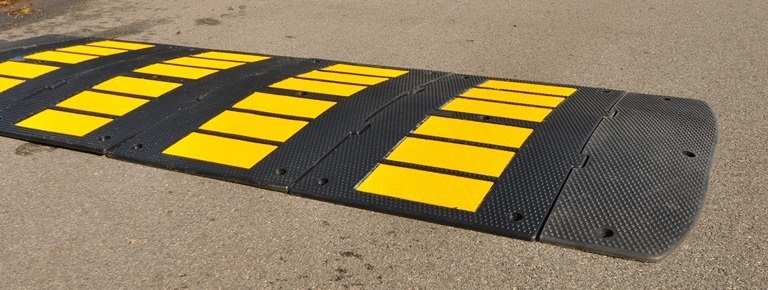
Now let's talk about recycled humps and bumps for a second…
Recycled bumps and humps promote recycling awareness (YAY!) and are of course environmentally friendly, where they prevent old and used tires from ending up in landfills. They can then be re-recycled when their already long life span ends. (Sounds like good deal, right?) They are more form fitting to pavement's naturally not-so-straight curves, bumps and cracks, but by added recycled rubber speed bumps and humps, they adjust to the form of the road by creating seamless shapes and contouring to pavement's and asphalt's curvature and imperfections.
Also adding to the awesomeness that is recycled material used for traffic control, is that they can be permanent or temporary solutions to your lot, road, or commercial setting. Maybe you are figuring out what works best in your parking lots, where the high traffic areas may be or what type of speeding deterrent works best. Oh, and did I mention they are light weight and do not crack, chip or break in high heat, or problematic weather conditions? 'Nuff said.
Recycled rubber and plastics are giving a more presentable and professional appearance and are not damaging to the existing pavement. They can also be tailored to you specific needs as a property manager or city planner without the mixers and drying wait time, giving you quick and economical solutions when in need or traffic safety. Take into consideration that recycled rubber and plastic speed bump and speed hump options are a great way to create a an effective safe and traffic calmed location AND help protect the earth, so it's a win-win.